
Member Tags
Member tags let group members add a label to their profile to give other members more context about who they are or their role in the group. It helps spark group conversation because users are more familiar and connected to one another.
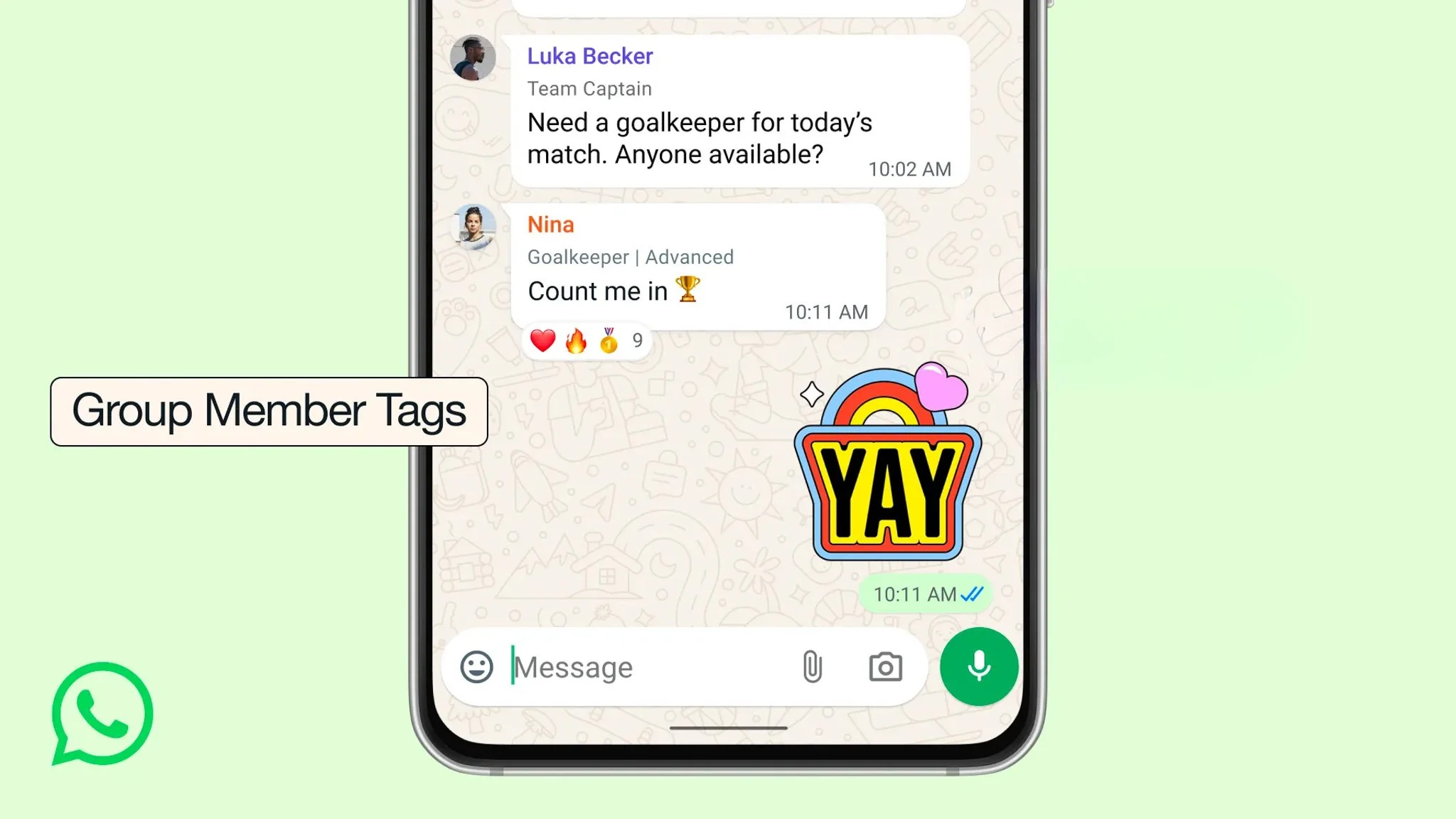
GTM campaign
Problem
New group members don’t have a way of recognizing or relating to each other, especially in large groups. They don’t know who is who or what role they play in the group.
Solution
Users can create a short label for every group (e.g. "Zara's Mom") that appears alongside their name.
Impact
Exceeded adoption + top-line group activation goals:
+0.12% US group sends/DAU
+0.09% global group sends/DAU
0.4–0.7% of user-group pairs add a member tag within the first 2 months of launch
My role
e2e content
Naming
Feature framing
UXR content planning
Privacy, integrity alignment
GTM language + positioning alignment

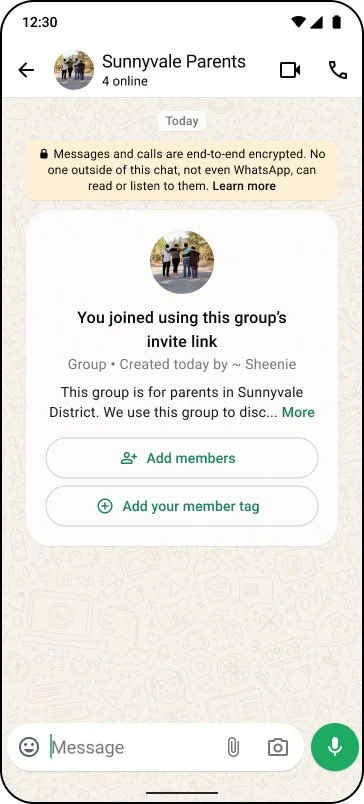
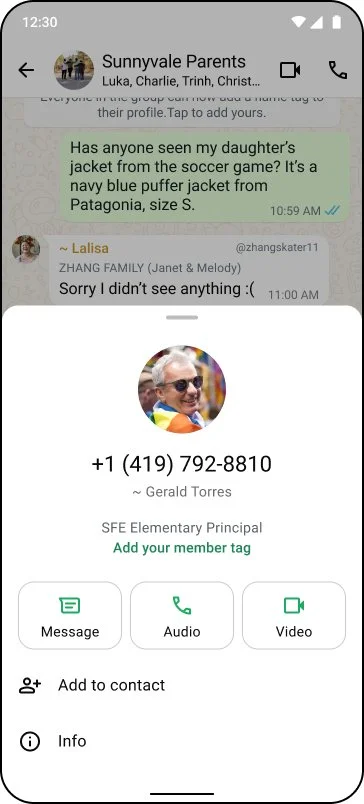
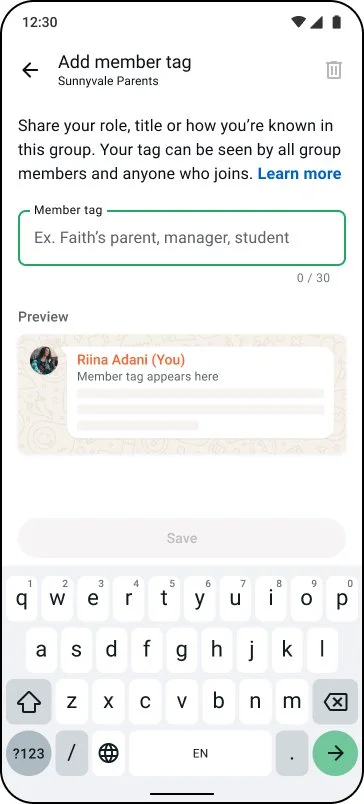
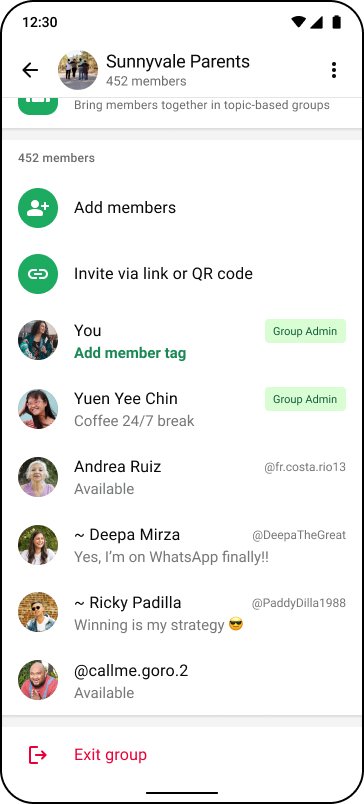
Final feature

How my strategy shaped the feature and achieved product goals
Constraints
The group space has many competing ‘titles’ for a member; username, profile name, and About. The content required distinction and comprehension.
Users needed to understand that a Member Tag was only applicable to the group level. It did not follow them throughout the WhatsApp experience.
Content was the only lever to show users what the feature is, how to use it and why it matters.
UXR Partnership
I partnered heavily with UXR to understand not just user need, but their mental models around group identity, context-sharing and barriers to conversation.
What I learned:
Users needed extra context on who someone was to feel comfortable reaching out.
Users confused member tags with their username or About.
Users had hesitancy around the feature due to privacy concerns when new members joined
Content strategy
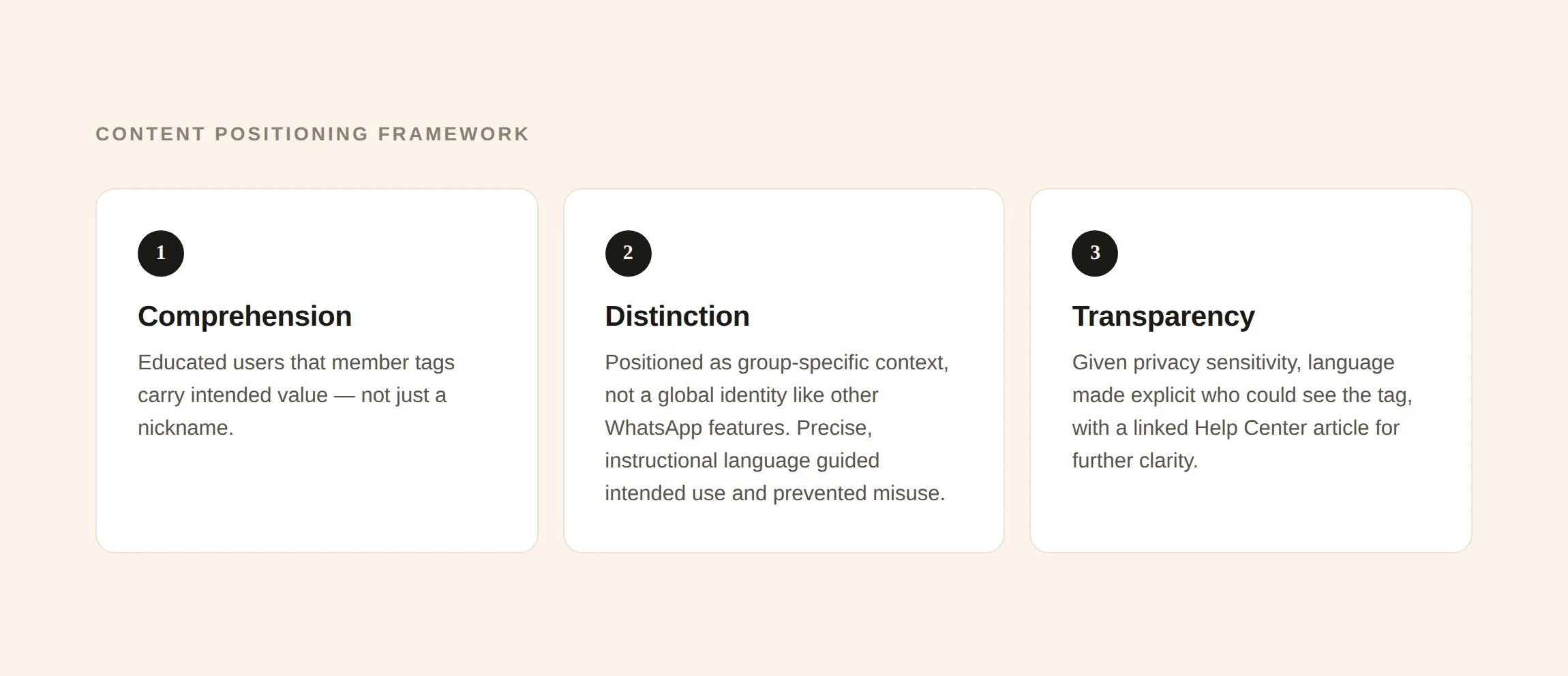
I used UXR to shape my content framework, that was optimized to close the gap between how users naturally understood the feature and how we needed them to understand it to meet product goals.
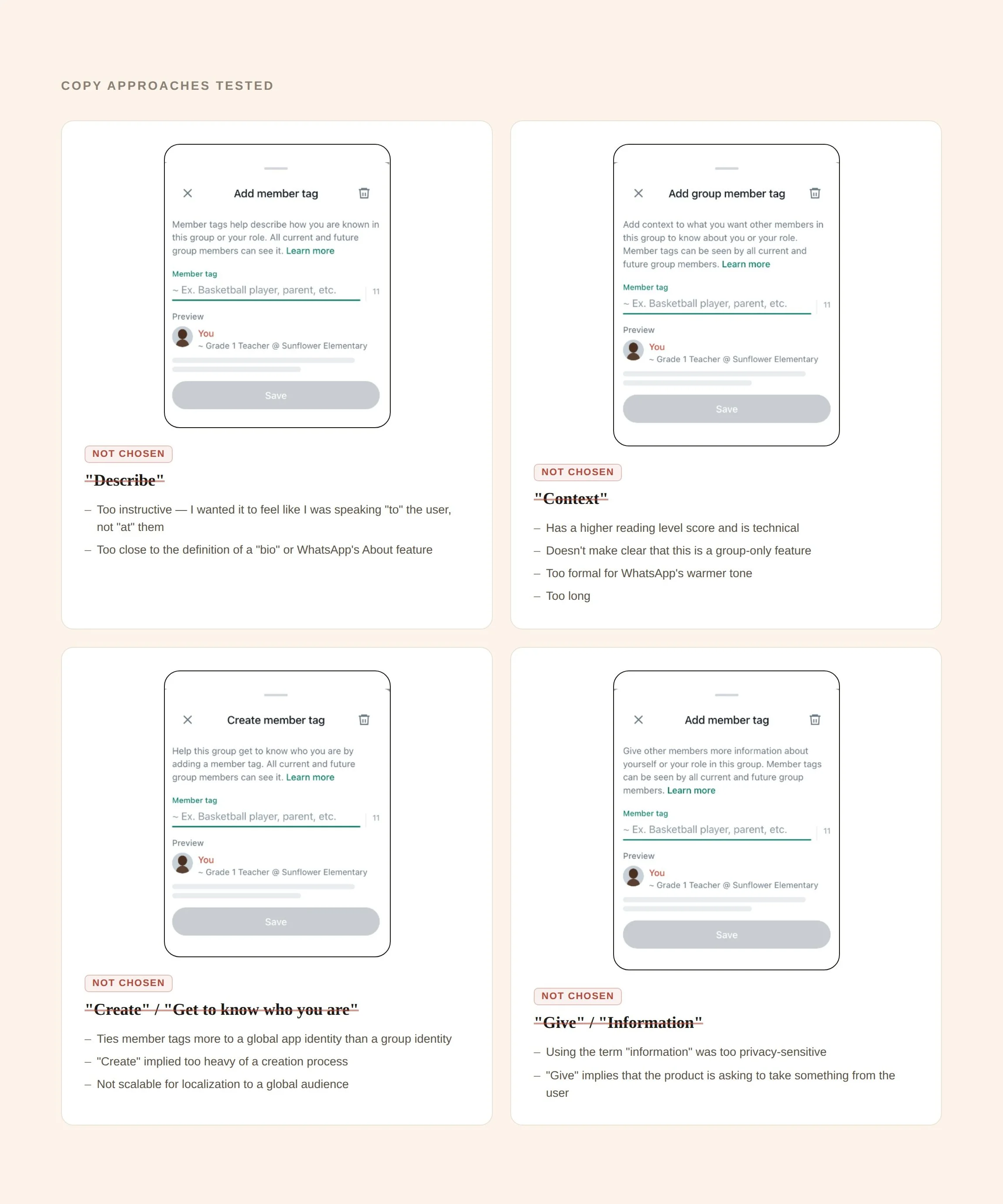
Explorations: what was NOT chosen & why
Four phrasings tested and rejected — evaluated against tone, scope, privacy and localization.

Naming. What I learned and won’t do again…
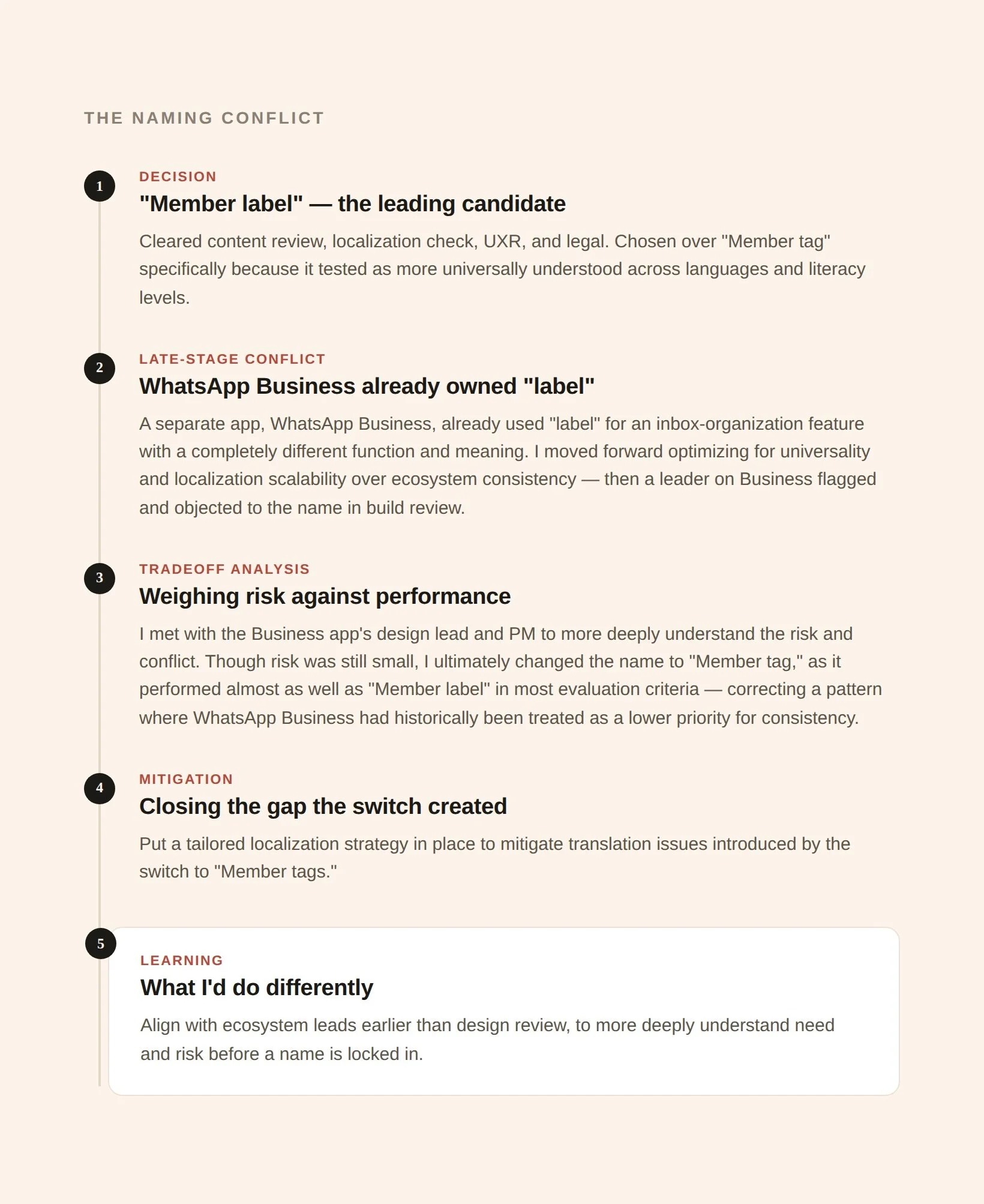
Naming explorations and my rationale against
Headline, Tagline: Implies a username or alias. Suggests replacing identity rather than adding context. Additionally, a user’s member tag appeared below their username in certain UI, making ‘headline’ misaligned with the IA.
Bio, “Known as”: Signals long-form, permanent, global self-description.
Name tag: The word "name" pulls users toward identity, not context, which is exactly the misuse I was trying to prevent.
Member role: Implies admin-assigned, structural roles. Too narrow and hierarchical.
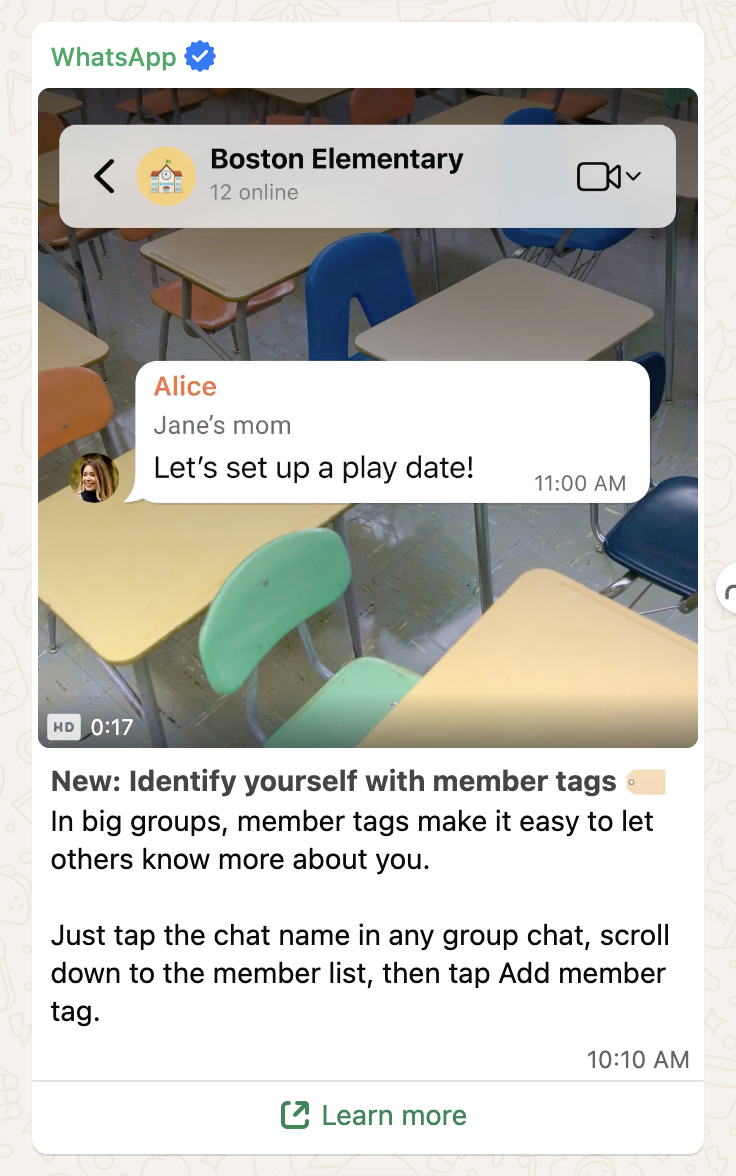
Ensuring feature distinction in GTM
I partnered closely with PMM to align external language (blog post and socials) with the product's intent. Early drafts included phrasing like "let everyone know more about yourself," which I flagged as too close to WhatsApp's About feature, which is visible to everyone.
I pushed for external copy to preserve the same distinction we'd built into the UI, so marketing language reinforced the product's positioning rather than undercutting it.